

Procurement teams are under constant pressure to balance cost, compliance, and continuity. When sourcing from Hospital Furniture Suppliers for Institutions, the real challenge isn’t finding options. It’s avoiding overpayment disguised as convenience.
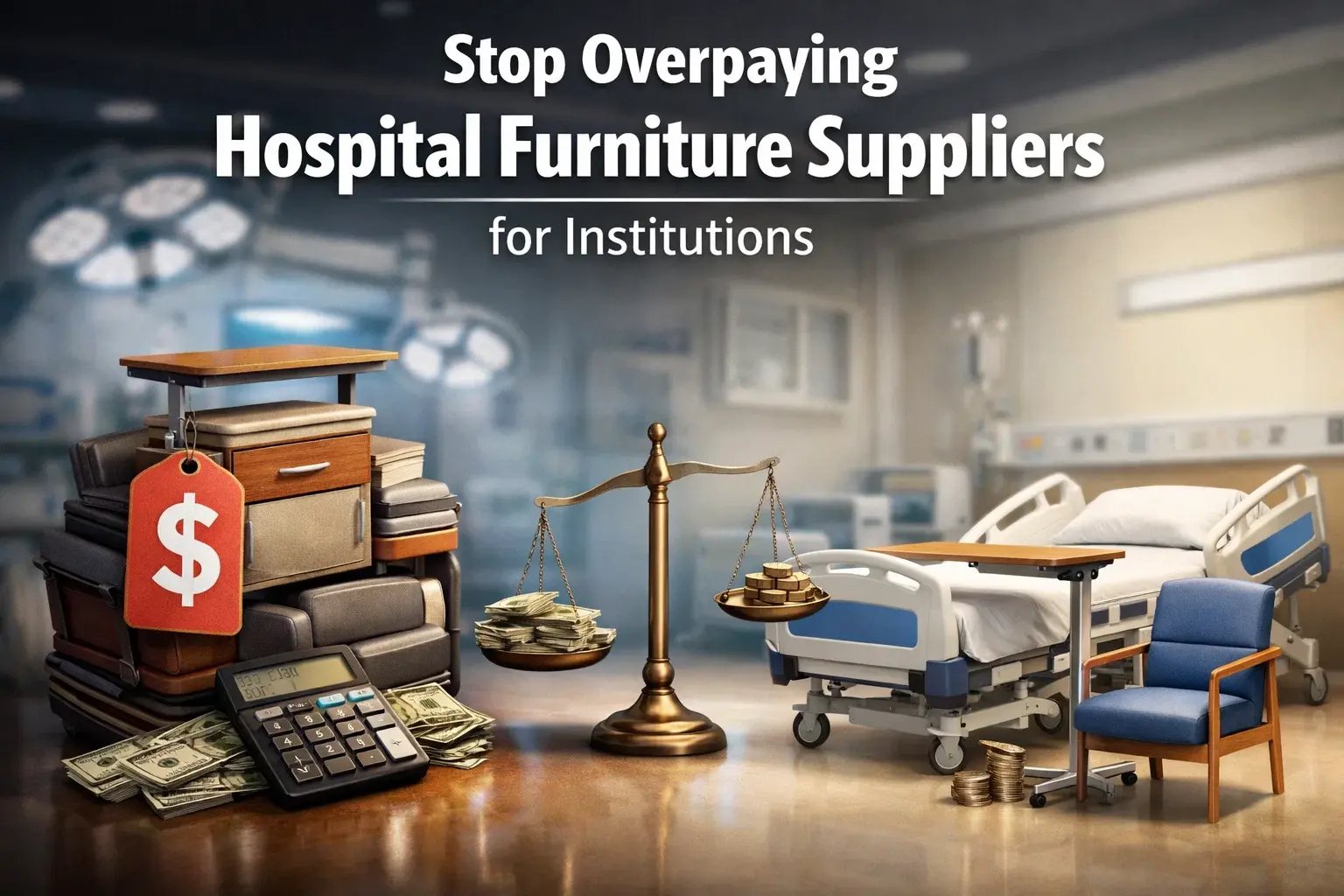
Institutional buyers rarely overpay because they lack negotiation skills. They overpay because of hidden inefficiencies:
- Unclear specifications
- Poor lifecycle evaluation
- Fragmented vendor comparisons
- Weak documentation control
- Unstructured export processes
Overpayment in institutional procurement is rarely about inflated invoices. It’s about long-term cost leakage.
If you’re an SME, exporter, or procurement head in renewable energy infrastructure, healthcare projects, or cross-border trade, understanding the logic behind cost control is no longer optional. It’s strategic.
This article outlines how institutions can stop overpaying—without compromising quality, compliance, or supply stability.
Overpayment Often Starts with Specification Gaps
Most institutional overpayment begins before quotations are even requested.
When technical specifications are vague, suppliers quote defensively. They add buffers to protect against ambiguity.
For example:
- Undefined steel thickness
- No clear weight-bearing requirements
- Incomplete surface coating standards
- Missing packaging instructions
Ambiguity increases perceived supplier risk.
And perceived risk increases pricing.
Practical Fix
Before requesting quotes:
- Define measurable technical standards.
- Align requirements across departments.
- Document durability expectations.
- Specify packaging and export handling needs.
Clarity reduces padding.
Precision reduces unnecessary cost.
Lifecycle Cost vs. Upfront Price
A common procurement trap is focusing only on the lowest initial quotation.
Institutional buyers should evaluate:
- Expected product lifespan
- Maintenance intervals
- Spare part availability
- Repair frequency
- Replacement cycles
A lower-priced unit that requires replacement in two years may cost more than a slightly higher-priced unit lasting six years.
True cost is measured over time.
Overpayment often occurs when lifecycle logic is ignored.
The Hidden Cost of Inconsistent Quality
In cross-border trade, inconsistent quality leads to:
- Shipment rejection
- Payment disputes
- Warranty claims
- Emergency reorders
Each of these creates indirect financial impact.
Institutions sometimes overpay not because the price is high, but because quality failures multiply operational cost.
Consistency is a cost control strategy.
Procurement Committees Must Think Beyond the Bid
Institutional decisions often involve:
- Technical committees
- Finance teams
- Compliance officers
- Senior management
If these groups operate in silos, procurement errors increase.
For instance:
- Technical teams may approve quality without evaluating logistics cost.
- Finance teams may focus on price without assessing durability.
- Compliance teams may delay approval due to incomplete documentation.
Misalignment creates inefficiencies that lead to financial waste.
Structured internal coordination reduces this risk.
Documentation Discipline Reduces Financial Leakage
Export-related errors can quietly inflate procurement costs.
Common documentation mistakes include:
- Incorrect HS codes
- Incomplete inspection reports
- Mismatched packing lists
- Missing certifications
These issues can result in:
- Port demurrage charges
- Clearance delays
- Storage fees
- Administrative penalties
Working with Institutional Medical Equipment Exporter partners who understand export workflows reduces these avoidable expenses.
Documentation is not administrative overhead.
It is cost control.
Digital Sourcing Brings Price Transparency
Traditional sourcing often relies on limited vendor networks.
Digital B2B sourcing platforms change that dynamic.
They allow buyers to:
- Compare structured product specifications
- Review multiple export-ready vendors
- Analyze historical pricing trends
- Maintain transparent communication records
Price visibility reduces overpayment risk.
Structured trade systems reduce information asymmetry.
SMEs entering institutional markets must adapt to this transparent environment.
Buyers now expect documented credibility.
The Logistics Equation: Freight and Packaging
Freight is often underestimated in procurement planning.
Hospital furniture is bulky.
Inefficient packaging design can:
- Reduce container optimization
- Increase freight cost per unit
- Raise handling risk
- Lead to damage claims
Institutions that analyze:
- Container load planning
- Knock-down engineering options
- Moisture-resistant packaging
- Palletization standards
Gain financial efficiency.
Freight optimization alone can significantly reduce total landed cost.
Overpayment often hides in logistics.
Volume Planning and Phased Procurement
Institutions frequently purchase in stages:
- Initial pilot phase
- Expansion phase
- Replacement cycle
If volume planning is not communicated early, suppliers may price conservatively.
Long-term agreements often reduce cost per unit through:
- Stable production scheduling
- Raw material planning
- Bulk material purchasing
Clear forecasting allows suppliers to optimize manufacturing.
Optimized manufacturing lowers cost.
Uncertain ordering patterns increase price buffers.
Negotiation Without Compromising Quality
Effective negotiation is not about forcing price reductions.
It’s about:
- Aligning production timelines
- Consolidating shipments
- Standardizing specifications
- Agreeing on consistent payment structures
For example, adjusting delivery schedules to align with production cycles can reduce rush manufacturing costs.
Strategic negotiation reduces waste, not quality.
When the Lowest Quote Is Actually Expensive
Procurement teams should watch for warning signs:
- Unusually low material cost
- Vague technical documentation
- No clear inspection process
- Weak export experience
If a quote is dramatically lower than others, ask:
- Are material standards reduced?
- Is coating quality inferior?
- Are packaging standards compromised?
Institutional buyers often discover overpayment later through maintenance or replacement.
Prevention is easier than correction.
Export Compliance and Hidden Trade Costs
Cross-border procurement adds complexity.
Customs delays can create:
- Hospital project delays
- Installation rescheduling
- Contractor penalties
- Budget overruns
Structured exporters reduce compliance risk.
For example, experienced Medical Bed & Furniture Exporters typically maintain:
- Standardized export documentation templates
- Defined inspection checkpoints
- Container loading supervision
- Pre-clearance preparation
This discipline reduces unexpected financial leakage.
Building Internal Procurement Intelligence
Institutional buyers benefit from maintaining internal sourcing intelligence:
- Historical vendor performance records
- Price benchmarking data
- Delivery time tracking
- Quality issue logs
Data-driven procurement reduces emotional decisions.
It also improves future negotiation positioning.
Overpayment often occurs when decisions rely on memory instead of data.
Cross-Border Trade Requires Cultural Awareness
Cost efficiency also depends on understanding regional procurement behavior.
For example:
- Some regions prioritize immediate availability.
- Others emphasize long-term supply contracts.
- Certain markets require additional compliance layers.
Suppliers who understand these nuances price more accurately.
Buyers who communicate expectations clearly reduce ambiguity cost.
Transparency lowers financial friction.
Structured Trade Systems Reduce Cost Volatility
The global shift toward organized trade ecosystems is reshaping institutional procurement.
Structured platforms enable:
- Supplier verification
- Digital documentation exchange
- Transparent pricing comparison
- Communication tracking
This environment reduces dependency on intermediaries.
It reduces guesswork.
And it reduces hidden cost exposure.
Institutions that adopt structured sourcing reduce long-term procurement volatility.
Practical Framework to Stop Overpaying
Here is a straightforward framework institutions can implement:
- Define measurable technical specifications.
- Evaluate lifecycle cost, not just unit price.
- Review packaging and freight optimization plans.
- Verify export documentation readiness.
- Consolidate orders where feasible.
- Maintain vendor performance records.
- Use digital sourcing systems for price comparison.
Each step builds financial discipline.
Together, they protect budgets.
Conclusion: Smarter Systems Reduce Overpayment
Overpaying is rarely about careless spending.
It is usually about invisible inefficiencies.
Institutions that apply structured procurement logic, documentation discipline, lifecycle evaluation, and digital sourcing transparency reduce unnecessary financial leakage.
Working within organized networks such as Hospital Furniture Wholesale Suppliers reflects a shift toward system-driven trade rather than fragmented transactions.
The future of institutional sourcing is not aggressive bargaining.
It is structured intelligence.
For SMEs, exporters, and procurement leaders in global trade, the real advantage lies in building systems that eliminate uncertainty.
And uncertainty is often the most expensive line item of all.
FAQs
1. Why do institutions overpay even when they negotiate hard?
Because hidden costs such as poor packaging, compliance errors, and maintenance issues are often overlooked during negotiation.
2. How can lifecycle analysis reduce procurement cost?
By evaluating durability and maintenance frequency, institutions can avoid repeated replacement expenses.
3. What role does export documentation play in cost control?
Accurate documentation prevents customs delays, demurrage fees, and compliance penalties.
4. Is digital sourcing really necessary for institutional procurement?
Yes. It increases transparency, improves vendor comparison, and reduces pricing asymmetry.