

Quality issues in industrial sourcing rarely appear at the quotation stage. They surface later—during installation, operation, or worse, during failure under load. For SMEs, exporters, and procurement teams, these hidden quality gaps can disrupt production, increase costs, and damage customer trust.
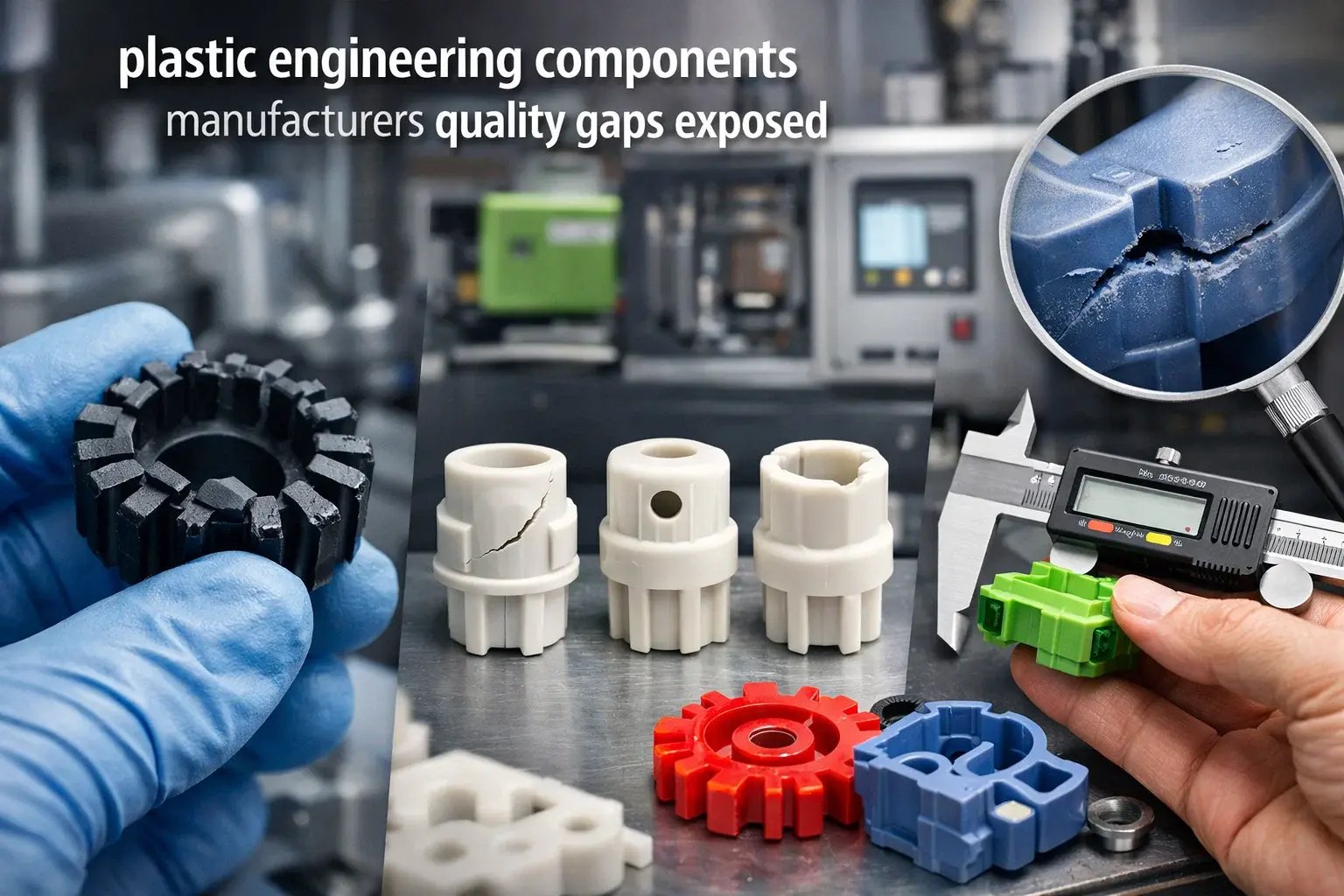 When evaluating plastic engineering components manufacturers, experienced buyers go beyond surface-level checks. They look for signals of consistency, process control, and long-term reliability.
The challenge is not finding suppliers—it’s identifying which ones can deliver predictable quality across batches and over time.
This article exposes the most common quality gaps in plastic engineering component sourcing and outlines how buyers can identify and mitigate them using structured procurement logic.
The Assumption of Consistent Quality
One of the biggest misconceptions in B2B sourcing is that a successful sample guarantees consistent production.
Where This Assumption Fails
Many suppliers can deliver a high-quality sample but struggle with:
- Maintaining uniformity in bulk production
- Controlling batch-to-batch variation
- Scaling without compromising standards
Why It Matters
Buyers rely on repeatability, not one-time performance. A single inconsistent batch can disrupt operations and increase rejection rates.
Consistency is not a feature—it’s a system.
Material Quality Variations
Material integrity is one of the most critical—and most overlooked—areas of quality control.
Common Gaps
- Use of mixed or recycled materials without disclosure
- Variations in polymer composition
- Lack of material certification
Operational Impact
These gaps often lead to:
- Reduced durability
- Lower load capacity
- Increased wear and tear
Material inconsistency directly affects performance and lifespan.
Lack of Process Standardization
Quality is built during production—not after.
What Happens Without Standardization
- Variability in dimensions
- Inconsistent finishing
- Irregular mechanical properties
Buyer Risk
Without structured processes, outcomes become unpredictable.
Reliable manufacturers invest in standardized workflows to ensure uniform results.
Inadequate Quality Inspection Systems
Inspection is the last line of defense—but it is often weak or inconsistent.
Common Issues
- Manual inspections without defined criteria
- Lack of in-process quality checks
- Minimal final inspection protocols
Consequences
- Defective components reaching buyers
- Increased returns and replacements
- Loss of trust in the supplier
Quality control must be systematic, not reactive.
Tolerance and Dimensional Inaccuracy
Precision matters in engineering components.
Where Gaps Occur
- Loose tolerance control
- Inconsistent measurement methods
- Equipment calibration issues
Real-World Impact
- Misalignment in assemblies
- Increased friction or wear
- Reduced system efficiency
Even small deviations can create significant operational issues.
Communication Gaps Leading to Quality Issues
Quality problems often begin with unclear communication.
Common Breakdowns
- Misinterpretation of specifications
- Lack of technical clarity
- Incomplete documentation
Result
Suppliers produce what they understand—not necessarily what the buyer intended.
Clear communication is essential for quality alignment.
Over-Promising Capabilities
Some suppliers commit beyond their actual capacity.
Warning Signs
- Agreeing to all specifications without clarification
- Unrealistic timelines
- Lack of technical discussion
Risk
Over-promising leads to under-delivery, especially in complex or customized orders.
Experienced buyers verify capabilities before committing.
Inconsistent Raw Material Sourcing
Even if production processes are stable, raw material inconsistency can create quality gaps.
Common Issues
- Changing material suppliers frequently
- Lack of traceability
- Inconsistent input quality
Impact
This leads to unpredictable product performance across batches.
Stable input materials are critical for stable output.
Absence of Documentation and Traceability
Documentation is often overlooked—but it is essential for accountability.
What Buyers Expect
- Material certificates
- Inspection reports
- Production records
Risks Without Documentation
- Difficulty resolving disputes
- Lack of accountability
- Inability to track issues
Traceability builds trust and simplifies problem-solving.
Quality Gaps in High-Volume Production
Scaling production introduces new challenges.
What Changes at Scale
- Increased pressure on processes
- Higher risk of variation
- Greater dependency on automation
Buyer Concern
Suppliers who perform well in small batches may struggle at higher volumes.
Validation at scale is critical.
Logistics and Handling Issues Affecting Quality
Quality does not end at production—it extends to delivery.
Common Problems
- Poor packaging
- Damage during transit
- Exposure to environmental conditions
Result
Even well-manufactured components can arrive in compromised condition.
Logistics must be part of the quality strategy.
Misalignment with Application Requirements
Components are sometimes sourced without fully understanding their application.
Why This Happens
- Incomplete requirement definition
- Lack of technical consultation
- Assumption-based sourcing
Impact
- Premature failure
- Reduced efficiency
- Increased replacement costs
Application context must guide sourcing decisions.
Evaluating plastic conveyor components manufacturers for Quality Assurance
When assessing plastic conveyor components manufacturers, buyers must go beyond surface-level indicators.
Key Evaluation Criteria
- Process transparency
- Inspection systems
- Material consistency
- Communication clarity
What Sets Reliable Suppliers Apart
- Structured workflows
- Documented quality controls
- Consistent performance
Quality is not claimed—it is demonstrated.
Building a Quality-Focused Procurement System
Preventing quality gaps requires structure.
Practical Steps
- Define clear technical specifications
- Validate samples thoroughly
- Assess production processes
- Monitor batch performance
- Maintain documentation
This approach reduces uncertainty and improves outcomes.
The Role of Digital Sourcing in Quality Visibility
Digital sourcing platforms are changing how buyers evaluate suppliers.
Advantages
- Access to supplier data
- Faster comparison
- Improved visibility
Limitation
Information must still be verified.
Digital tools support decisions—but do not replace due diligence.

Conclusion
Quality gaps in sourcing are rarely accidental—they are the result of unstructured processes, unclear communication, and incomplete evaluation.
For buyers, the goal is not just to identify suppliers, but to build a sourcing system that prioritizes consistency, transparency, and accountability.
Working with dependable industrial Plastic component suppliers requires a disciplined approach—one that focuses on long-term reliability rather than short-term convenience.
In a competitive B2B landscape, quality is not a differentiator. It is the foundation of sustainable growth.
FAQs
1. What is the most common quality gap in sourcing?
Inconsistency across batches is one of the most frequent issues, often caused by weak process control.
2. How can buyers detect material quality issues early?
Request material certifications, test samples, and verify supplier sourcing practices.
3. Why is documentation important in quality control?
It ensures traceability, accountability, and easier resolution of disputes.
4. How do I ensure quality at scale?
Validate suppliers under real production conditions and monitor performance continuously.