
Industrial buyers in 2026 are operating in a very different environment than even a few years ago. Supply chains are more fragmented, timelines are tighter, and cost pressures are constant. At the same time, expectations around speed, scalability, and reliability have increased.
This shift has forced manufacturers, exporters, and distributors to rethink how they approach infrastructure investments.
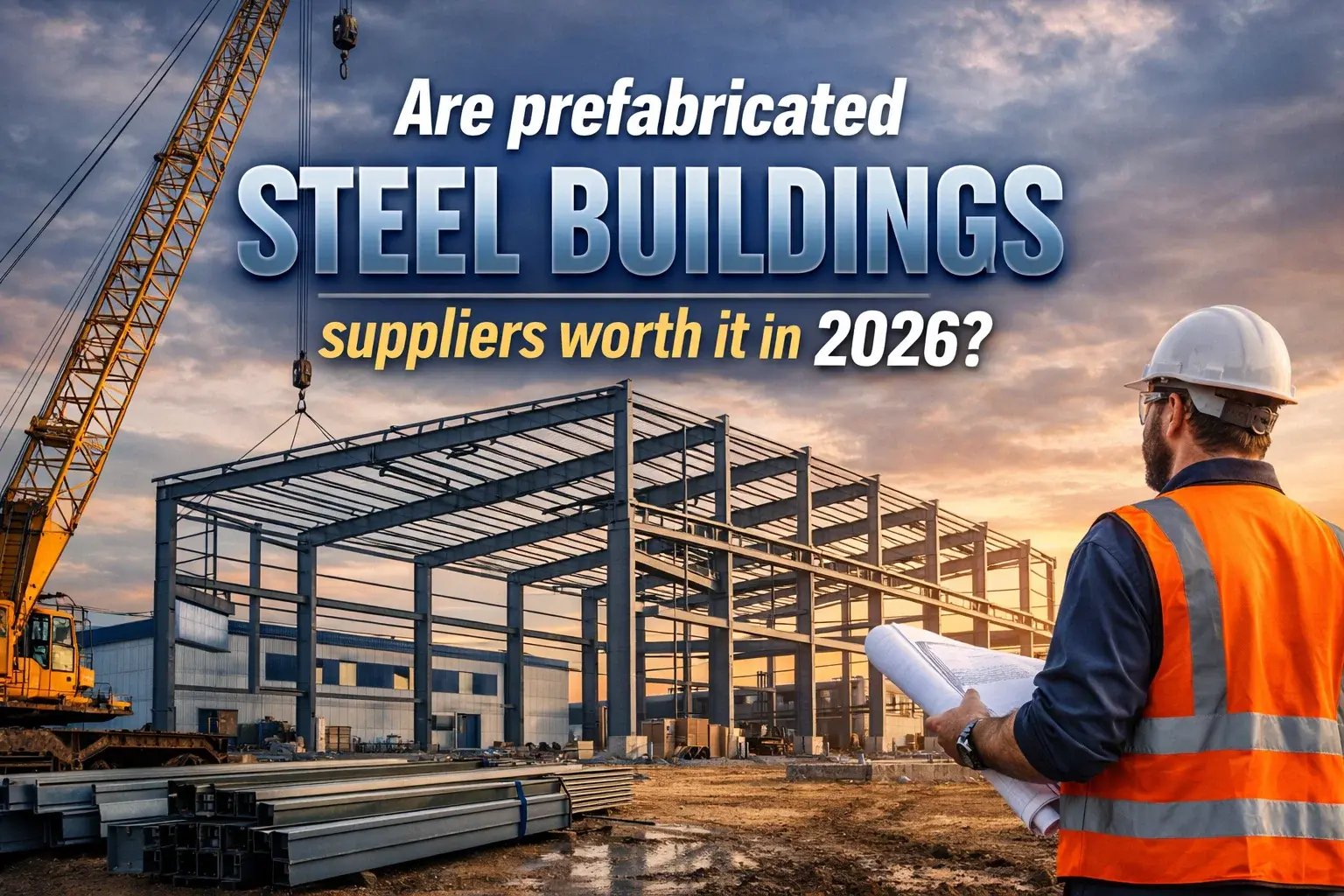 In that context, prefabricated steel buildings suppliers are gaining attention—not as a trend, but as a response to real operational challenges.
The key question is not whether prefabrication is popular. It’s whether it delivers consistent value in today’s B2B trade environment.
What Has Changed in 2026 Procurement Dynamics
Before evaluating value, it’s important to understand what has changed.
Speed Has Become a Competitive Advantage
Time-to-market is no longer just a planning metric. It directly affects revenue, customer relationships, and market positioning.
Delays in infrastructure development can:
- Push back production schedules
- Disrupt export commitments
- Increase working capital pressure
Prefabrication addresses this by reducing on-site construction time significantly.
Greater Demand for Predictability
Buyers are moving away from uncertain timelines and variable costs. Predictability is now a priority.
This includes:
- Fixed project timelines
- Controlled cost structures
- Standardized quality outcomes
Prefabricated systems are designed to offer this level of consistency.
Where Prefabricated Steel Buildings Deliver Real Value
The value of prefabrication is not universal. It depends on how it aligns with operational needs.
Faster Project Execution
Since components are manufactured off-site, on-site work is limited to assembly. This reduces:
- Weather-related delays
- Labor dependency on-site
- Coordination complexity
For exporters working on tight schedules, this can be a critical advantage.
Consistency in Quality
Controlled factory environments allow for:
- Standardized fabrication processes
- Better quality control
- Reduced human error
This leads to more predictable structural performance.
Scalability for Growing Operations
Prefabricated systems are inherently modular. This allows businesses to:
- Expand facilities in phases
- Add new sections without major disruption
- Adapt layouts based on changing needs
This flexibility is particularly valuable for SMEs scaling operations.
Where Buyers Need to Be Cautious
Prefabrication is not a one-size-fits-all solution. There are areas where buyers need to exercise caution.
Over-Reliance on Standard Designs
Many suppliers offer pre-designed templates. While efficient, these may not fully align with:
- Specific production workflows
- Equipment placement
- Local environmental conditions
Customization is still necessary for optimal performance.
Supplier Capability Variations
Not all suppliers operate at the same level. Differences may exist in:
- Engineering expertise
- Material sourcing
- Fabrication precision
Buyers must evaluate these factors carefully rather than assuming uniform quality.
Cost Considerations: Short-Term vs Long-Term
Cost remains a central concern, but it must be viewed in context.
Upfront Investment vs Lifecycle Cost
Prefabricated systems may appear cost-effective upfront due to:
- Reduced labor requirements
- Shorter project timelines
However, true value depends on:
- Durability
- Maintenance requirements
- Adaptability over time
A well-designed system reduces long-term costs significantly.
Hidden Costs to Watch For
Buyers should look out for:
- Transportation and logistics expenses
- Installation complexity
- Modifications required for site conditions
These factors can affect overall cost efficiency.
Integration with Modern Industrial Needs
Industrial infrastructure today must support more than just basic operations.
Compatibility with Energy Systems
As factories adopt rooftop solar for factories, structural compatibility becomes critical. Prefabricated buildings must be designed to handle:
- Additional load
- Long-term exposure
- Integration with electrical systems
Failure to plan for this can limit future upgrades.
Alignment with Digital Operations
Modern facilities often incorporate automation and smart systems. Structures must support:
- Cable management
- Equipment layout flexibility
- Future technological upgrades
Prefabricated designs need to account for these requirements.
Digital Sourcing and Supplier Evaluation in 2026
The way buyers source suppliers has evolved significantly.
Access to a Broader Supplier Base
Digital sourcing platforms allow buyers to:
- Compare multiple suppliers across regions
- Evaluate technical capabilities
- Access verified project data
This improves transparency and reduces risk.
Structured Decision-Making
Instead of relying on limited information, buyers can use standardized data to:
- Assess performance history
- Compare specifications
- Evaluate compliance
This leads to more informed procurement decisions.
Real-World Insight: When Prefabrication Works Best
Patterns across industries show that prefabrication delivers the most value in specific scenarios.
Case Insight: Export-Oriented Manufacturer
A manufacturer with tight delivery schedules adopted prefabricated structures to reduce project timelines. This allowed them to start operations earlier and meet export commitments without delay.
Case Insight: Multi-Location Expansion
A business expanding across multiple regions used prefabrication to standardize infrastructure. This ensured consistent quality and simplified maintenance across locations.
These examples highlight the importance of aligning the solution with operational needs.
When Traditional Construction Still Makes Sense
Prefabrication is not always the best option.
Highly Customized Projects
Facilities with highly specific design requirements may benefit from traditional construction methods that allow greater flexibility.
Complex Site Conditions
Sites with challenging terrain or unique environmental conditions may require tailored approaches that go beyond standard prefabrication.
Understanding these limitations helps buyers make balanced decisions.
What Buyers Should Prioritize in 2026
To make the right choice, buyers need to focus on a few key factors.
Supplier Evaluation
Look beyond pricing and assess:
- Engineering capability
- Fabrication standards
- Quality control processes
Design Alignment
Ensure the structure matches operational requirements and future expansion plans.
Lifecycle Thinking
Consider not just the initial investment, but long-term performance and adaptability.
Use of Digital Platforms
Leverage structured sourcing tools to improve visibility and decision-making.
Conclusion
Prefabrication in 2026 is not about convenience—it is about control.
For many industrial buyers, it offers a way to manage timelines, standardize quality, and scale operations efficiently. But its value depends entirely on how well it is implemented.
Buyers who approach it with a clear understanding of design, supplier capability, and long-term needs are more likely to see consistent results.
In this evolving landscape, pre engineered building manufacturers and prefabrication specialists are becoming central to how industrial infrastructure is planned and executed.
The question is no longer whether prefabrication is worth it. The real question is whether it is being used strategically.
FAQs
1. Are prefabricated steel buildings suitable for all industries?
They are suitable for many industrial applications, but highly specialized operations may require customized solutions.
2. Do prefabricated buildings last as long as traditional structures?
Yes, when designed and fabricated properly, they offer comparable durability and performance.
3. How do buyers ensure supplier reliability?
By evaluating technical capabilities, past projects, and using digital sourcing platforms for better visibility.
4. Can prefabricated buildings support future expansions?
Yes, their modular design makes them well-suited for phased expansion and scalability.