

Growth is often celebrated as a sign of success, but in B2B environments, unmanaged growth can quietly destabilize entire ecosystems. As supply chains become more interconnected and digital trade expands, businesses are realizing that scale without structure creates risk. This is especially visible as the b2b ecommerce market continues to mature, bringing together buyers, suppliers, distributors, and partners at unprecedented speed.
From real-world industry experience, responsible scale is not about growing slower—it is about growing intentionally. Companies that scale with awareness of their ecosystem earn trust, resilience, and long-term relevance. This article explores what responsible scaling really means and how businesses can grow without eroding the foundations they depend on.
Understanding Scale Beyond Revenue Growth
Scale impacts more than internal operations
When a business scales, its decisions ripple outward. Supplier capacity, partner expectations, logistics networks, and buyer experiences are all affected.
Many organizations underestimate this impact. They focus on internal metrics—sales, users, or regions—while ignoring ecosystem strain. Over time, this misalignment creates friction and reputational risk.
Growth without alignment creates fragility
Rapid expansion often exposes weaknesses in processes, communication, and governance. In B2B ecosystems, fragility shows up as delayed deliveries, inconsistent quality, or partner dissatisfaction.
Responsible scale means strengthening the system as growth accelerates, not stretching it thin.
What an Industry Ecosystem Really Is
More than a network of transactions
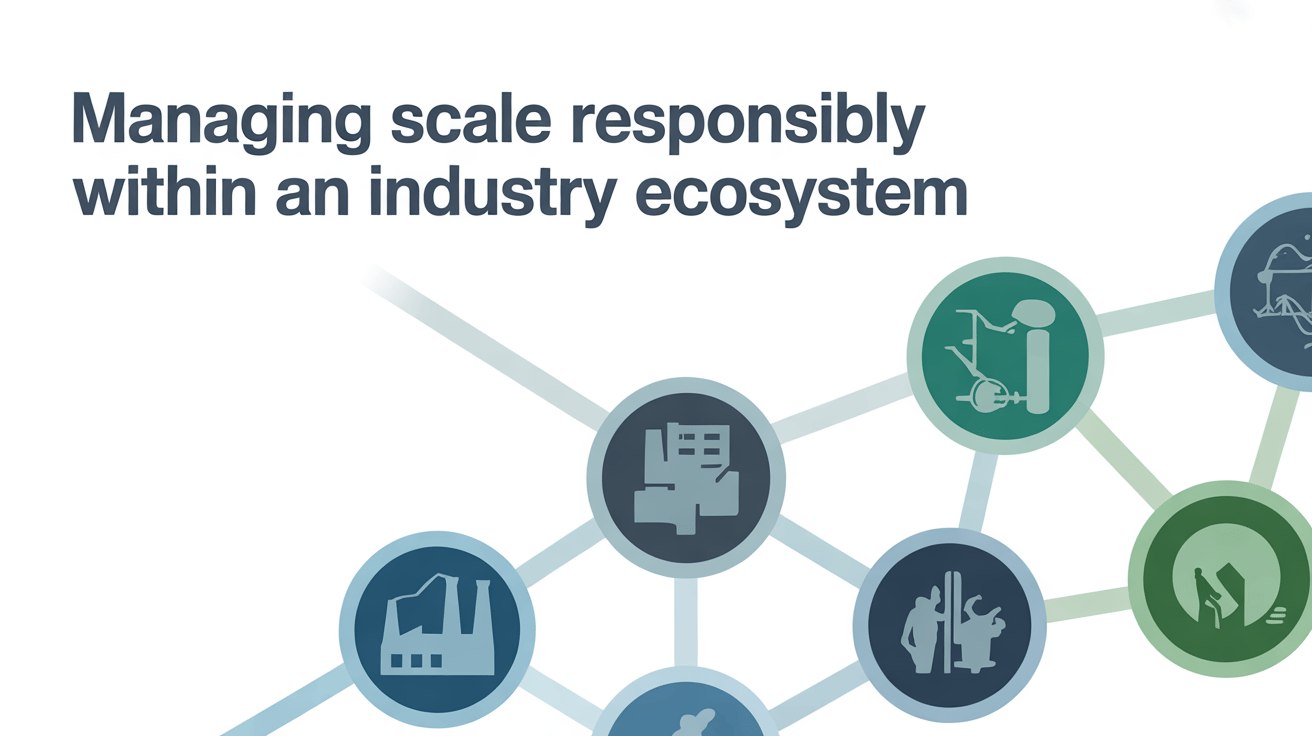
An industry ecosystem includes manufacturers, service providers, distributors, regulators, technology enablers, and buyers. These relationships are interdependent.
When one participant grows aggressively without coordination, others are forced to react—often at a cost.
Trust is the ecosystem’s currency
In mature ecosystems, trust determines who gets priority, flexibility, and long-term collaboration. Businesses that scale responsibly protect this trust by honoring commitments and maintaining transparency.
Those that do not may grow quickly but struggle to sustain partnerships.
Principles of Responsible Scaling
Capacity before expansion
Experienced operators know that scaling demand without scaling capacity leads to failure. Responsible growth starts with honest assessments of operational readiness.
This includes supplier bandwidth, internal teams, compliance readiness, and customer support capability.
Systems over shortcuts
Shortcuts may work temporarily, but they rarely scale. Responsible businesses invest early in systems—processes, data structures, and governance—that support consistent execution.
These systems reduce dependency on individual heroics and improve reliability as volume increases.
Aligning Growth With Ecosystem Health
Listening to partners and suppliers
Partners often feel the strain of growth first. Late payments, unclear forecasts, or sudden volume spikes signal misaligned scaling.
Businesses that actively listen to partner feedback can adjust before issues escalate into conflicts.
Predictability matters more than speed
In B2B trade, predictability builds confidence. Partners prefer steady, forecastable growth over unpredictable surges that disrupt planning.
Responsible scale favors consistency over dramatic but unstable expansion.
The Role of Digital Structure in Responsible Scaling
Visibility enables better decisions
As ecosystems grow, visibility becomes critical. Businesses need clear insight into orders, commitments, and partner performance to manage complexity.
Structured digital environments help organizations see where stress points are emerging and act proactively.
Standardization reduces friction
Standardized information, processes, and expectations reduce misunderstandings as scale increases. This consistency becomes a stabilizing force within the ecosystem.
In practice, companies operating through a b2b ecommerce marketplace benefit from shared standards that make multi-party coordination more manageable.
Managing Buyer and Supplier Expectations
Avoiding overpromising
One of the fastest ways to damage trust during scaling is overpromising. Ambitious targets can pressure teams into commitments they cannot sustain.
Responsible growth is honest growth—setting expectations that can be met consistently.
Communicating change clearly
Scale often brings change: new processes, timelines, or partners. Transparent communication helps ecosystem participants adapt without friction.
Silence or surprise erodes confidence quickly.
Governance as a Growth Enabler
Clear rules support fair participation
As ecosystems grow, informal norms break down. Governance—clear rules, roles, and accountability—ensures fairness and consistency.
This is not about control; it is about clarity that supports sustainable participation.
Balancing flexibility with discipline
Responsible scaling balances adaptability with discipline. While flexibility supports innovation, discipline ensures reliability.
The most resilient ecosystems maintain both.
Long-Term Value Over Short-Term Gains
Sustainable scale compounds advantage
Businesses that scale responsibly earn reputational capital. Over time, this attracts better partners, more reliable buyers, and stronger collaboration opportunities.
This compounding effect often outweighs short-term revenue spikes.
Ecosystem strength becomes a competitive edge
In mature industries, competitors can replicate products and pricing. What they struggle to replicate is a healthy, trusted ecosystem.
Responsible scaling builds this defensible advantage quietly but powerfully.
Conclusion
Managing scale responsibly within an industry ecosystem is a strategic choice, not a constraint. Businesses that understand their interconnected role grow with intention, protect trust, and create long-term value for everyone involved.
As digital trade continues to evolve, operating within a structured b2b ecommerce market will increasingly reward those who see growth as a shared journey rather than a solo race.
FAQs
What does responsible scaling mean in B2B industries?
It means growing in a way that strengthens operations, partnerships, and trust rather than creating instability.
Why does rapid growth cause ecosystem issues?
Because partners, suppliers, and systems may not be ready to absorb sudden increases in demand or complexity.
How can SMEs scale responsibly?
By investing early in systems, communicating clearly, and aligning growth with real capacity.
Is slower growth always better?
Not necessarily. Predictable, well-supported growth is better than fast but unstable expansion.