
For plant managers, safety officers, and procurement teams operating in Tamil Nadu, the decision to source Custom-Built Industrial Ladders in tamilnadu is a decision to replace that risk with precision. It is a commitment to specifying equipment that fits the actual access requirements of the plant rather than approximating them with whatever is available in a supplier's standard range.
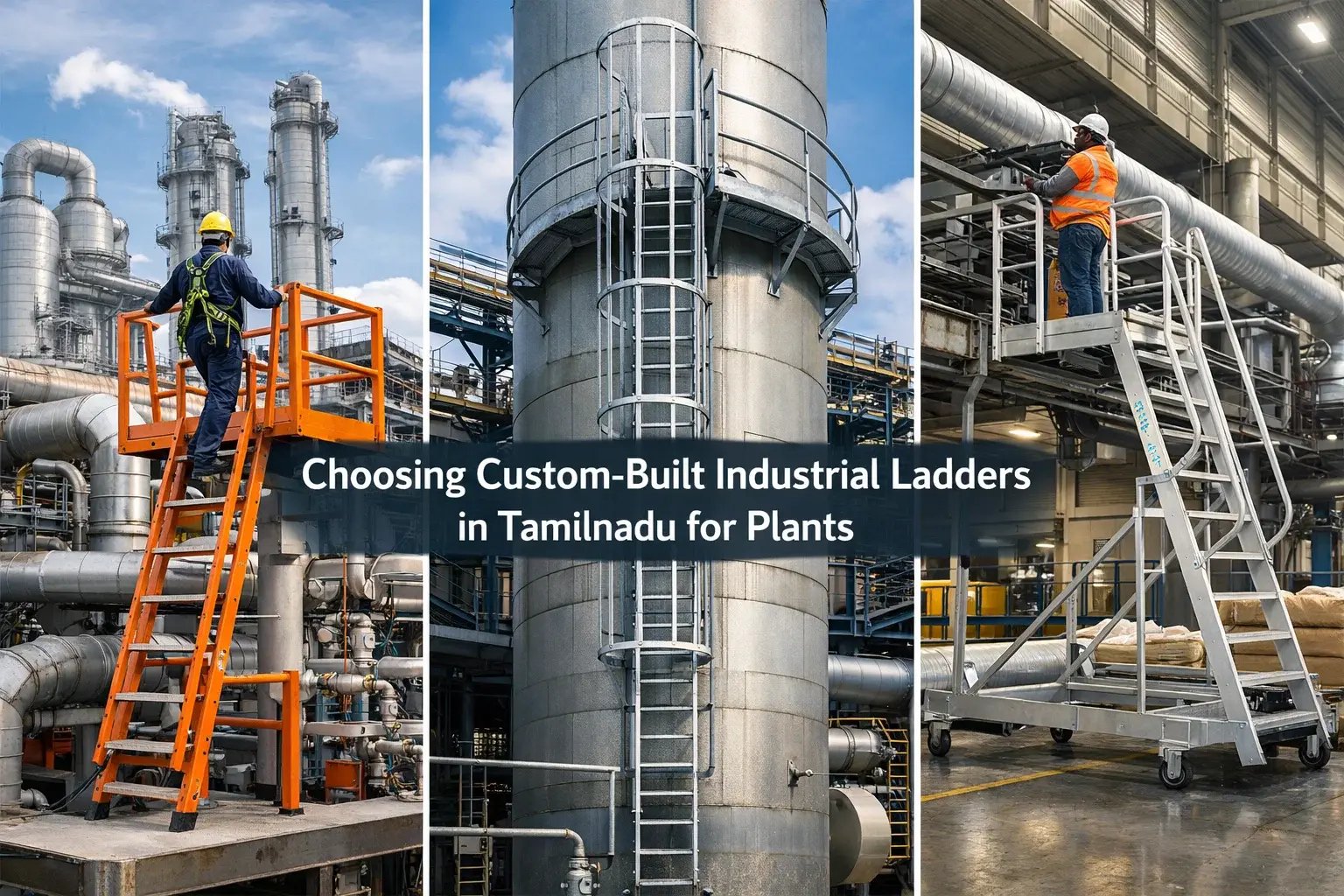 This article provides a structured guide to making that choice well — covering the specification criteria that define fit-for-purpose industrial ladders, the supplier evaluation framework that identifies capable manufacturers, and the procurement process that translates application requirements into delivered equipment that performs safely and durably under real plant conditions.
Understanding the Access Requirements of Your Plant
The specification process for custom industrial ladders begins with a thorough understanding of the access requirements the equipment will serve. This is not a single question — it is a systematic review of every vertical access point in the facility that the ladder procurement will address.
For each access requirement, the review should establish the height to be reached, the task to be performed at that height, the load that will be carried to and used at that height, the floor surface the ladder will stand on, the space available for the ladder base and platform, and any environmental conditions — chemical exposure, temperature variation, humidity, contamination — that affect material and surface specification.
This review produces a set of access requirement profiles — one for each distinct access point or category of access point in the facility. These profiles are the foundation of the specification process. Every design decision for each ladder flows from the access requirement profile it serves.
In plants with multiple distinct access requirements — which describes most medium and large industrial facilities — the review may identify several different ladder configurations needed. A maintenance access point on an elevated conveyor system has different requirements than an inspection point on a chemical vessel, which has different requirements than a storage access point on a high-bay racking system. Each requires a separate specification, and attempting to serve all three with a single standard configuration produces a solution that is adequate for none of them.
Custom-Built Storage Station manufacturers engaged in the same facility often contribute to this access requirement review — identifying vertical access needs created by storage system design that might otherwise be overlooked in a procurement process focused on the production floor rather than the warehouse.
Defining the Safety Specification for Each Access Point
Once the access requirement profiles are established, the safety specification for each ladder configuration can be defined. Safety specification covers the structural, ergonomic, and environmental parameters that define a ladder capable of serving the access point safely.
Structural specification begins with load rating. Calculate the maximum working load for each access point — the combined weight of the heaviest user, the heaviest tool load they will carry, and any materials they will handle at height. Apply the appropriate safety factor — typically four times the maximum working load for industrial applications — to arrive at the structural load rating the ladder must be designed to meet.
Frame material and gauge are then selected to achieve this load rating with appropriate structural integrity. For standard load applications in dry indoor environments, structural steel with defined minimum gauge is appropriate. For higher loads, chemical exposure, or extreme temperature conditions, material selection requires more specific analysis of the structural and environmental requirements of the installation.
Ergonomic specification covers the dimensions and geometry of the ladder that determine how safely and comfortably workers can use it. Platform height must match the actual access point height — not the nearest standard increment. Step pitch must be set to a comfortable and secure stride length. Handrail height and geometry must provide adequate support throughout the access and working sequence. Platform dimensions must allow the user to work without postural constraints or reach beyond the platform boundary.
Environmental specification covers material and surface treatment selection for the conditions the ladder will experience. Anti-slip surface treatment must be matched to the floor and platform contamination conditions of the facility. Surface treatment for the frame and steps must be compatible with the cleaning agents, chemicals, and environmental conditions present in the installation location.
Industrial Workshop Adjustable Tool Stand suppliers operating in the same plant environment apply comparable specification rigour to tool positioning equipment — providing a useful reference point for understanding the level of specification detail that a capable equipment manufacturer can work with and translate into compliant fabrication.
Regulatory Compliance as a Specification Input, Not an Afterthought
In Tamil Nadu's industrial plants, regulatory compliance for vertical access equipment is not a post-procurement verification exercise. It is a specification input that shapes design decisions from the outset.
The Factories Act obligations administered by the Tamil Nadu Department of Industries require that vertical access equipment in covered facilities is of adequate strength, properly maintained, and used safely. These are performance-based requirements — the equipment must genuinely be adequate for the application, documented as such, and maintained in compliance condition throughout its service life.
Sector-specific regulations add further requirements that vary by industry. Pharmaceutical plants operating under Schedule M face material and surface finish requirements that extend to access equipment used in production areas. Chemical plants subject to the Hazardous Wastes Management Rules face equipment compatibility requirements for the chemical environment. Food processing facilities regulated under FSSAI face hygiene requirements that affect ladder material, surface treatment, and design features.
These regulatory requirements need to be identified during the access requirement review and incorporated into the safety specification for each affected access point. A ladder specified without reference to the applicable regulatory framework may be physically adequate for the access task but non-compliant with the regulatory obligations of the facility — an outcome that creates legal exposure without improving operational performance.
Documentation requirements also flow from the regulatory context. Facilities subject to Factories Act inspection need maintenance and inspection records for all vertical access equipment. Pharmaceutical and food processing facilities need material certifications and surface treatment validation documentation for equipment used in regulated areas. These documentation requirements should be specified to the manufacturer before fabrication begins, not requested after delivery when the fabrication records may no longer be available.
Evaluating Manufacturers: The Criteria That Reveal Genuine Capability
With the access requirement profiles, safety specifications, and regulatory documentation requirements defined, the manufacturer evaluation process can begin. The criteria that reveal genuine capability in custom industrial ladder fabrication follow a consistent pattern across procurement contexts.
Design engagement quality remains the primary indicator of a manufacturer's capability to deliver fit-for-purpose custom equipment. A manufacturer who asks about the access requirement, the working load, the floor surface, the environmental conditions, and the regulatory obligations before proposing a design is working from the application context. One who moves directly to standard configurations and price is working from their product range. The difference in design outcome is significant and predictable.
Fabrication standards for industrial ladders cover welding quality, dimensional accuracy, surface treatment application, and the testing procedures applied to finished equipment. Ask specifically about the welding processes used for structural joints, the inspection procedures applied during fabrication, and the load testing conducted on completed units. A manufacturer who can answer these questions with specificity is operating with fabrication standards that support consistent quality. One who cannot is either working below those standards or working without them.
Compliance documentation capability is essential for regulated procurement contexts. Ask whether the manufacturer provides material certifications as standard, how they document welding quality, what surface treatment validation records they generate, and whether they have experience supporting equipment qualification processes for pharmaceutical, food, or chemical applications. A manufacturer with established compliance documentation processes treats these as routine deliverables. One without them treats documentation as an exceptional request — which means it will be produced inconsistently and incompletely.
Reference applications in comparable industrial sectors provide evidence of relevant experience. A manufacturer who has built custom industrial ladders for comparable facilities — similar access heights, similar load requirements, similar environmental conditions, similar regulatory obligations — brings applied knowledge that reduces specification risk and design iteration. Ask for specific project descriptions and follow up with reference customers where possible.
Regional capability and site engagement carry practical procurement value in Tamil Nadu's manufacturing environment. A manufacturer who can visit the facility during the specification process produces more accurate designs than one working from transmitted dimensions and descriptions. Site visits allow the manufacturer to observe floor conditions, structural constraints, adjacent equipment clearances, and operational workflows that affect design decisions — and to identify access requirements that the procurement team may not have included in their initial access requirement review.
Specification Development: Translating Requirements into Fabrication Documents
The specification document that the manufacturer fabricates against is the most critical deliverable in the procurement process. A specification that is incomplete, ambiguous, or inaccurate produces fabrication outcomes that do not match the access requirement — and corrections after delivery are expensive and disruptive.
A complete industrial ladder specification covers the access height and platform configuration, the structural load rating and safety factor applied, the frame material and gauge, the platform dimensions and surface treatment, the step pitch and rung or step material, the handrail height and specification, the base footprint and anti-slip foot design, the wheel and locking mechanism specification for mobile units, the surface treatment for all components, and the documentation deliverables required with the finished equipment.
Each of these parameters should be specified with reference to the access requirement profile and safety specification developed during the earlier stages of the process. Where the manufacturer's design expertise is relied on for specific decisions — such as frame gauge selection for a defined load rating — the specification should document the design basis for those decisions, not just the outcome.
The specification development process benefits from manufacturer engagement before the document is finalised. A capable manufacturer can identify specification gaps, flag potential design conflicts, and propose solutions to access requirement constraints that the procurement team has not yet resolved. This collaborative approach to specification development produces a more complete and accurate document than one developed in isolation and submitted to the manufacturer for comment.
Lead Time Planning and Project Integration
Custom fabrication lead times for industrial ladders vary with design complexity, material availability, and the manufacturer's current production load. Realistic lead time planning requires engaging manufacturers early enough in the project timeline that their honest lead time estimate can be accommodated without compressing the fabrication process.
For plant expansion projects, production line upgrades, and new facility commissioning, vertical access equipment procurement should be initiated as early in the project timeline as practical — ideally during the facility design phase, when access requirement profiles can be developed alongside the structural and equipment layout decisions that define them.
Early engagement also creates the opportunity to coordinate ladder placement with facility layout decisions — ensuring that base footprints, platform positions, and movement paths for mobile units are accommodated in the floor layout rather than retrofitted into a layout that was finalised without them.
Conclusion
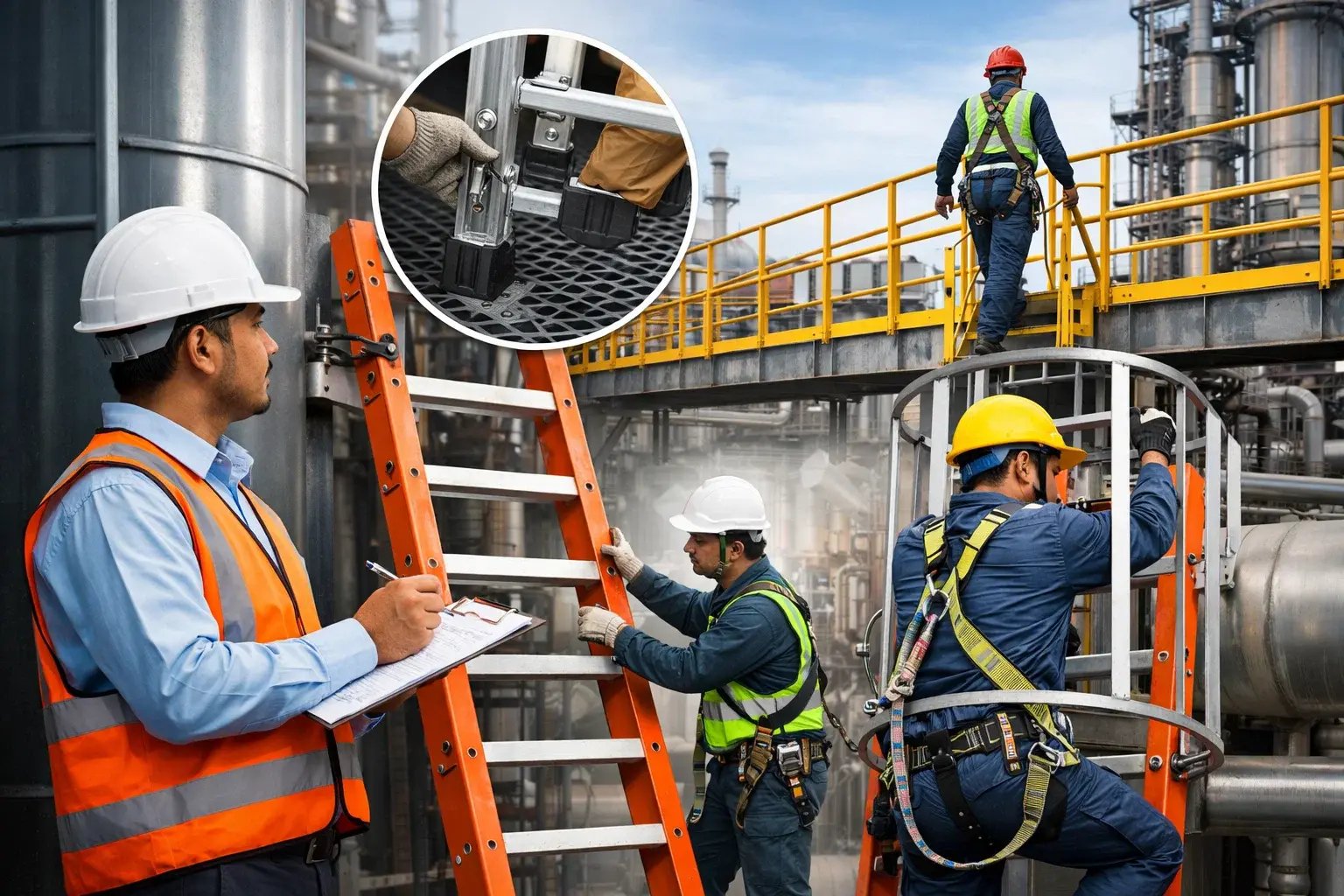
Choosing custom-built industrial ladders for Tamil Nadu's plants is a procurement decision that rewards systematic rigour. The facilities that get it right are those that start with a thorough access requirement review, develop complete safety specifications grounded in regulatory and operational reality, evaluate manufacturers against criteria that reveal genuine fabrication capability, and engage suppliers early enough in the project timeline to accommodate the lead times that quality custom fabrication requires.
The result is vertical access equipment that fits the facility precisely — dimensionally, structurally, environmentally, and regulatorily — and performs safely and durably under real plant conditions across its full service life.
For plant managers and procurement teams ready to apply this approach, connecting with Custom-Built Industrial Workbench manufacturers and the broader regional manufacturing ecosystem they represent provides access to fabricators with the application knowledge, specification capability, and regional presence to support a procurement process grounded in operational precision rather than catalogue convenience.
Every access point in a plant deserves equipment specified for it. That standard is achievable — and it starts with the right procurement decision.
FAQs
1. How do I conduct an effective access requirement review for a plant with multiple distinct vertical access points?
Systematically document each distinct access point in the facility, recording the height to be reached, the task performed at that height, the maximum working load including user weight and carried tools or materials, the floor surface and base footprint available, and any environmental conditions affecting material specification. Group access points with similar requirements into configuration categories, and develop a separate safety specification for each category. This structured approach ensures that every access requirement is addressed precisely rather than approximated by a single configuration that fits none of them well.
2. What documentation should a custom industrial ladder manufacturer provide with delivered equipment?
At minimum, expect dimensional verification records confirming that delivered equipment matches the specification, load test documentation for structural verification, material certifications for frame and surface materials, and surface treatment inspection records. For regulated sectors — pharmaceutical, food processing, chemical — additional documentation covering welding quality inspection, compliance with applicable BIS standards, and sector-specific regulatory requirements should be specified to the manufacturer before fabrication begins and confirmed as deliverables in the procurement agreement.
3. How does the floor surface condition of a plant affect industrial ladder specification?
Floor surface condition affects both anti-slip foot design for stationary ladders and wheel and locking mechanism specification for mobile units. Contamination conditions — oil, coolant, chemical splash, water — affect the anti-slip surface treatment required on steps and platforms. Uneven or textured floor surfaces affect base stability design and, for mobile units, the castor diameter and tread compound required to maintain manoeuvrability under load. These conditions must be assessed during the access requirement review and incorporated into the safety specification before manufacturer engagement begins.
4. When is it appropriate to specify a mobile rather than a stationary custom industrial ladder for a plant application?
Mobile ladder specification is appropriate when a single unit is required to serve multiple access points across the production floor, when access requirements are intermittent and the ladder needs to be relocated between uses, or when permanent placement of a stationary unit would obstruct production flow or equipment clearance zones. Mobile units require additional specification attention for wheel type, base width relative to platform height, locking mechanism reliability, and manoeuvrability through the aisle widths and doorways of the facility.