
You manufacture quality LED panels. Your products meet international standards. Your prices are competitive.
But buyers aren't finding you.
Orders are slow. Inquiries are rare. Meanwhile, your competitors seem busy.
The problem isn't your products. It's visibility.
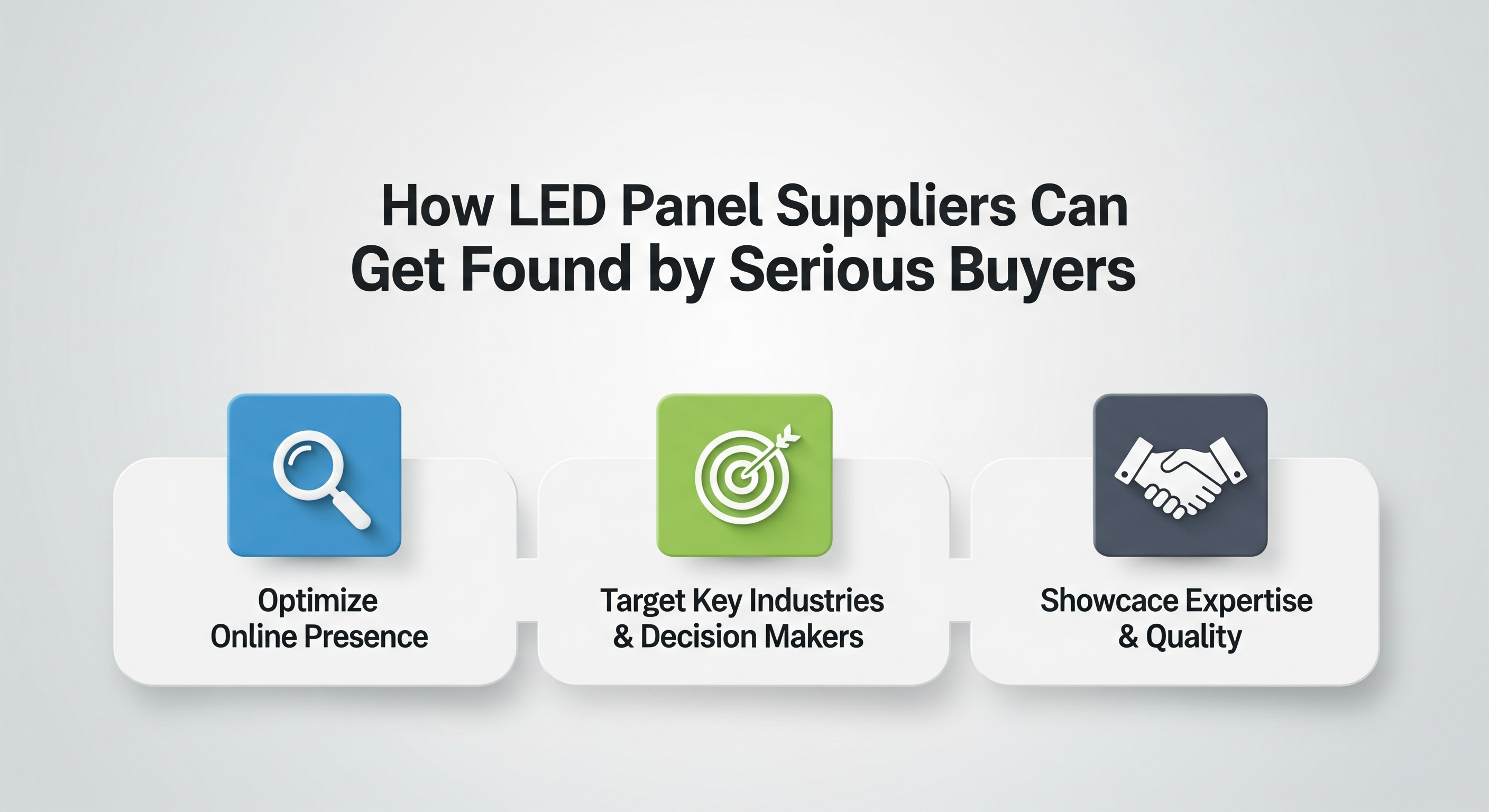
Here's how LED panel suppliers can get found by buyers who are actually ready to purchase, and build a steady flow of quality inquiries.
Where Buyers Actually Look
Buyers don't search randomly. They have patterns.
Most start with Google. They type what they need. They look at the first page of results. If you're not there, they don't know you exist.
Others go to B2B platforms. They filter by product type, certifications, and location. If your profile isn't complete or verified, you get filtered out.
Some ask for referrals. They talk to people in their network. If no one knows about you, you don't get mentioned.
And some attend trade shows. They walk the floor looking at products. If you're not exhibiting, they can't find you.
You need to be visible in these places. Not just one. Multiple channels.
Understanding buyer behavior helps you position yourself. Different buyers use different channels. Cover multiple pathways to capture more opportunities.
Track where your current inquiries come from. This shows which channels work for your target market.
Don't spread yourself too thin initially. Master one or two channels, then expand.
But don't rely on just one channel either. Diversification protects against algorithm changes or platform issues.
Your Website Isn't Enough
You have a website. Good start. But is anyone finding it?
Search for the products you sell. Where does your website appear? Page one? Page five? Not at all?
If you're not on page one, buyers aren't seeing you.
Your website needs proper optimization. Use the terms buyers actually search for. Include product specifications. Add clear photos. Make contact information easy to find.
But don't stop there. A website alone won't get you found.
Website optimization takes time. It's not instant. But it's essential for long-term visibility.
Content matters. Product descriptions should be detailed. Technical specifications should be clear. Photos should be professional.
Mobile optimization is critical. Many buyers search on phones. If your site doesn't work on mobile, you lose them.
Loading speed affects rankings. Slow sites rank lower. Optimize images. Improve server response times.
Security matters too. Sites without SSL certificates rank lower and scare buyers away.
Build Presence on B2B Platforms
Large B2B platforms have millions of buyers searching every day. If you're not there, you're missing opportunities.
Create complete profiles. Add all your products with specifications. Include certifications. Upload quality photos.
Get your business verified. Verified badges increase trust. Buyers filter for them.
Respond quickly to inquiries. Platforms track response times. Fast responders get priority placement.
Update your profile regularly. Active suppliers get better visibility than inactive ones.
Different platforms serve different markets. Research which platforms your target buyers use.
Complete profiles perform better. Fill every field. Add videos if possible. Showcase your facility.
Keywords matter on platforms too. Use terms buyers search for in titles and descriptions.
Regular activity signals reliability. Post updates. Share news. Engage with the platform community.
Content That Buyers Search For
Buyers search for solutions to problems. Not just products.
They search "LED panels for cold storage" or "panels for office retrofit" or "high CRI panels for retail."
Create content that answers these searches. Blog posts. Technical guides. Case studies.
This content brings buyers to you. When they search for solutions, your content appears. They read it. Then they contact you.
You're not just selling products. You're providing information that helps buyers make decisions.
Content marketing builds authority. You become the expert buyers trust.
Educational content works better than promotional content. Teach, don't sell. Sales come naturally when you provide value.
Answer common questions. Solve typical problems. Share insights from your experience.
Case studies are particularly effective. They show real applications. Buyers see themselves in your examples.
Technical guides demonstrate expertise. They help buyers make better decisions. Even if they don't buy from you immediately, they remember you.
Make It Easy to Contact You
A buyer finds your profile. They're interested. They want more information.
How easy is it to reach you?
Is your contact form visible? Do you respond to emails quickly? Can they call you during business hours?
Buyers have options. If reaching you is difficult, they'll move to the next supplier.
List multiple contact methods. Email. Phone. WhatsApp if that's common in your market.
Set up notifications so you know immediately when someone reaches out.
The faster you respond, the better your chances of closing the sale.
Response speed matters more than most suppliers realize. First responder often wins.
Make your contact information visible everywhere. Website. Platform profiles. Social media. Email signature.
Consider live chat if you have the resources. Instant answers increase conversion rates.
Time zone considerations matter for international business. Clarify your business hours or offer after-hours contact options.
Show Proof of What You Do
Buyers want evidence that you can deliver.
Show them. Post photos of your facility. Share details about your quality control process. List certifications clearly.
Include case studies. "We supplied 5,000 panels for this office building project." Show the results.
Add customer testimonials if you have permission. Real feedback from real clients builds trust.
Don't make buyers guess if you're legitimate. Show them proof upfront.
Visual proof works best. Photos and videos are more convincing than text descriptions.
Show your production process. Buyers want to see how products are made.
Quality control documentation matters. Show testing procedures. Share quality standards.
Certifications should be prominent and verifiable. Display certificate numbers. Make verification easy.
Certifications Matter for Visibility
Buyers filter by certifications. CE, UL, RoHS, ISO - these aren't just quality standards. They're search filters.
If you have certifications, display them prominently. Make them easy to verify.
If you don't have certifications your target markets require, get them. They're not optional for serious buyers.
Many buyers won't even consider uncertified suppliers. Certifications don't just show quality. They make you findable.
Research which certifications matter in your target markets. Different regions have different requirements.
Budget for certifications. They're investments in market access.
Keep certifications current. Expired certificates create problems.
Some certifications take months to obtain. Plan ahead. Don't wait until you need them.
Target the Right Buyers
Not every inquiry is worth pursuing. Some buyers want samples with no intention to purchase. Others are price shopping with no budget.
Focus on buyers who match your business. What size orders do you handle well? What markets do you specialize in? What kind of clients benefit most from your products?
Target your visibility to those buyers. Be clear about your minimum order quantities. Specify which markets you serve.
This filters out tire kickers. You get fewer inquiries, but higher quality ones.
Clear positioning attracts right-fit buyers. Vague positioning attracts everyone, including those you can't serve well.
Specialization can increase visibility. Being known for something specific is better than being unknown for everything.
Define your ideal customer. Then make sure your marketing speaks to them.
Don't try to be everything to everyone. Focus creates clarity. Clarity attracts the right buyers.
Building Long-Term Visibility
You post on a platform once. Nothing happens. You stop.
That's not how visibility works.
You need consistent presence. Regular updates. Frequent activity. Ongoing engagement.
This takes time. But it compounds. The more consistently you show up, the more visible you become.
Set a schedule. Update your profiles weekly. Post content monthly. Follow up on inquiries daily.
Visibility is built through repeated action, not one-time effort.
Think of visibility like compound interest. Small consistent actions accumulate into significant results.
Track what works. Double down on effective channels and content types.
Consistency builds recognition. Buyers start recognizing your name. Recognition builds trust.
Long-term visibility requires patience. Results won't appear immediately. But they will appear.
Measure What Matters
You're working on visibility. But is it working?
Track where your inquiries come from. Which platforms generate the most interest? What content gets the most views?
Measure response times. How quickly do you reply to inquiries? Fast responses convert better.
Monitor conversion rates. What percentage of inquiries turn into quotes? What percentage of quotes turn into orders?
This data tells you what's working and what isn't. Focus more on what works.
Set specific metrics. Number of profile views. Inquiry volume. Response times. Conversion rates.
Review metrics monthly. Identify trends. Adjust strategies based on data.
Compare costs across channels. Which channels deliver the best return on investment?
Testing reveals insights. Try different approaches. See what performs better.

Conclusion
You can't win orders from buyers who don't know you exist.
Focus on the channels where your target buyers spend time. Build complete, verified profiles. Create helpful content. Respond quickly. Show proof of capability.
Do these things consistently, and buyers will find you.
The orders are out there. Make sure they find their way to you.
Success as an LED bulb manufacturers or supplier isn't just about making quality products. It's about making sure the right buyers can find you when they're ready to purchase.
Frequently Asked Questions
How long does it take to see results from visibility efforts?
B2B visibility builds over 3-6 months. Platform profiles may generate inquiries within weeks once verified and complete. SEO and content marketing take longer, typically 4-6 months for significant Google visibility. Consistency matters most - sporadic effort produces sporadic results. Sustained daily or weekly activity compounds over time into steady inquiry flow.
Should I invest in paid advertising or focus on organic visibility?
Start with organic visibility through complete profiles, content, and SEO. This builds sustainable long-term presence. Add paid advertising once organic efforts show traction. Paid ads accelerate results but stop when you stop paying. Organic visibility continues working. For most suppliers, 80% budget on organic and 20% on paid advertising balances immediate results with long-term growth.
How quickly should I respond to buyer inquiries to stay competitive?
Aim for 2-4 hours during business hours. Buyers contact multiple suppliers simultaneously. First clear, helpful response gets attention. Set up mobile notifications. Use templates for common questions to speed up responses. Even if you can't provide full details immediately, acknowledge receipt within an hour. Say "Received your inquiry, will send detailed response within 24 hours." This keeps you in consideration.