

Fast response matters more than ever in B2B relationships. When a client raises a request or asks a question, they expect quick and clear answers. Slow responses can frustrate customers, weaken trust, and in some cases even cost you contracts. The challenge is that as businesses grow, managing multiple client requests across emails, phone calls, and spreadsheets becomes messy.
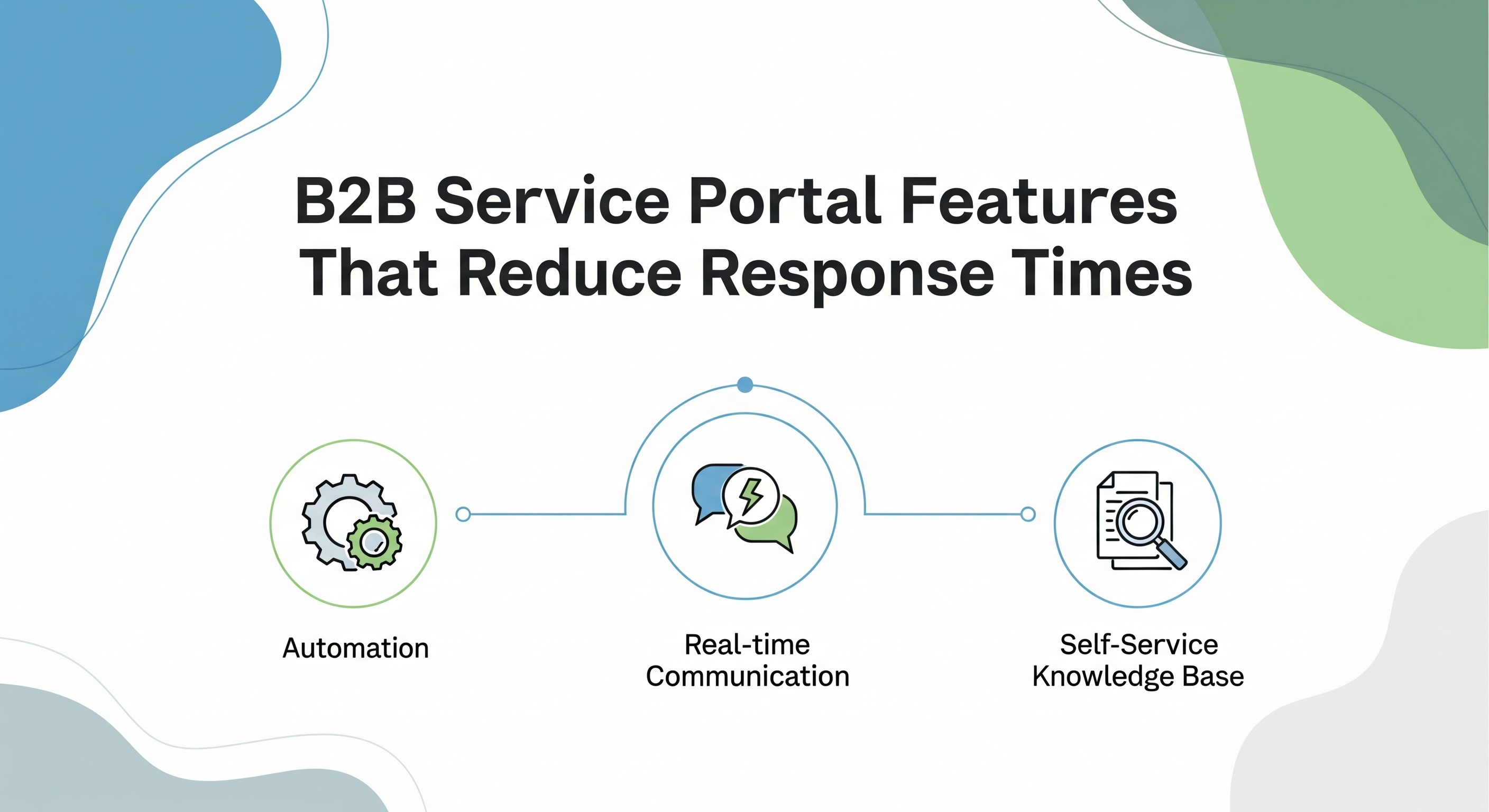
This is where a B2B service portal makes a real difference. By centralizing client interactions and automating support workflows, it cuts down response times and helps businesses deliver better service. Let’s break down the key features that make this possible.
Why Response Time Matters in B2B
Unlike B2C, where individual buyers may tolerate delays, B2B clients often deal with bulk orders, contracts, and recurring services. Time is money. If issues or requests take too long to resolve, it can disrupt operations, cause delays in supply chains, and harm long-term relationships.
Here are a few real-world scenarios where fast response time makes or breaks trust:
-
A distributor waiting on an urgent order update
-
A buyer needing quick confirmation for compliance documents
-
A client asking for immediate technical support during implementation
In all these cases, faster response means smoother operations and stronger loyalty.
Key Features of a B2B Service Portal That Reduce Response Times
1. Centralized Request Dashboard
Instead of juggling emails and calls, the portal provides a single dashboard where all client requests appear. Support staff can view pending issues, prioritize urgent cases, and assign tasks without confusion.
2. Automated Ticket Routing
The system automatically directs a client request to the right team member based on category, urgency, or client type. This saves hours of manual sorting and ensures no request gets lost.
3. Real-Time Notifications
Clients and staff receive instant updates when there’s progress on a request. Automated alerts cut down the need for back-and-forth follow-ups.
4. Knowledge Base and Self-Service Options
Many simple queries—like checking order status or accessing product documents—can be resolved without staff intervention. A B2B service portal with self-service options reduces repetitive requests and speeds up resolution for clients.
5. SLA Management Tools
Built-in Service Level Agreement (SLA) tracking ensures requests are handled within agreed timelines. Teams are reminded when deadlines approach, preventing delays.
6. Integrated Communication Channels
Instead of switching between email, chat, or phone, all communication happens within the portal. This eliminates miscommunication and ensures a complete history of client interactions.
7. Analytics and Reporting
The portal tracks average response times, request trends, and bottlenecks. Managers can use these insights to fix weak points and improve team performance.
Benefits of Faster Response Times Through Service Portals
-
Stronger Client Satisfaction: Quick support builds trust and loyalty.
-
Higher Productivity: Teams save time by using automation instead of manual tracking.
-
Improved Accuracy: Centralized data reduces errors and missed requests.
-
Scalability: Businesses can handle more clients without adding extra staff.
Example: A Mid-Sized Export Firm
Consider an SME exporter handling dozens of client orders daily. Before using a service portal, most requests came through email, leading to delays and miscommunication. After adopting a b2b selling platform, the company saw response times improve by 45%. Clients used the portal to raise requests, check updates, and resolve issues without calling or emailing. This freed up staff to focus on complex cases, improving both efficiency and customer trust.
Best Practices for Using Service Portal Features
-
Encourage Clients to Use the Portal – Provide training and incentives for customers to log requests directly.
-
Customize Workflows – Tailor categories, SLAs, and routing rules to fit your business.
-
Update Knowledge Resources – Keep FAQs and guides current so clients can self-serve effectively.
-
Review Reports Regularly – Use analytics to identify slow areas and optimize workflows.
-
Train Your Team – Ensure staff know how to use all features for maximum efficiency.
The Bigger Picture
Reducing response time is not just about faster service—it’s about strengthening relationships. A portal ensures clients feel heard, valued, and supported. For SMEs, this can be the difference between a one-time order and a long-term contract.
.png?width=2816&height=1536&name=download%20(11).png)
Conclusion
Client expectations are rising, and businesses need smarter tools to keep up. By using features like automated ticket routing, real-time notifications, and self-service options, it helps companies cut response times while improving service quality.
For SMEs aiming to scale while keeping customer satisfaction high, adopting such a platform is no longer optional. It’s a strategic investment. And when integrated into a trusted b2b portal free listing it ensures service excellence while supporting business growth.
FAQs
1. What is the main benefit of a B2B service portal?
It centralizes client requests, making it faster and easier for teams to respond and resolve issues.
2. How do service portals improve efficiency?
They automate tasks, route tickets to the right team, and allow clients to self-serve for basic needs.
3. Can SMEs afford a B2B service portal?
Yes, many solutions are scalable and priced for small and mid-sized businesses.
4. Do service portals integrate with other tools?
Most modern portals integrate with CRMs, ERPs, and communication platforms for seamless workflows.
5. Why are faster response times important in B2B?
Delays can disrupt supply chains and harm client trust. Faster responses keep operations smooth and relationships strong.